
The future of air suspension.
The RHC® control system for auxiliary air suspension systems automatically regulates the ride height and enables you to enjoy a relaxed, worry-free journey.
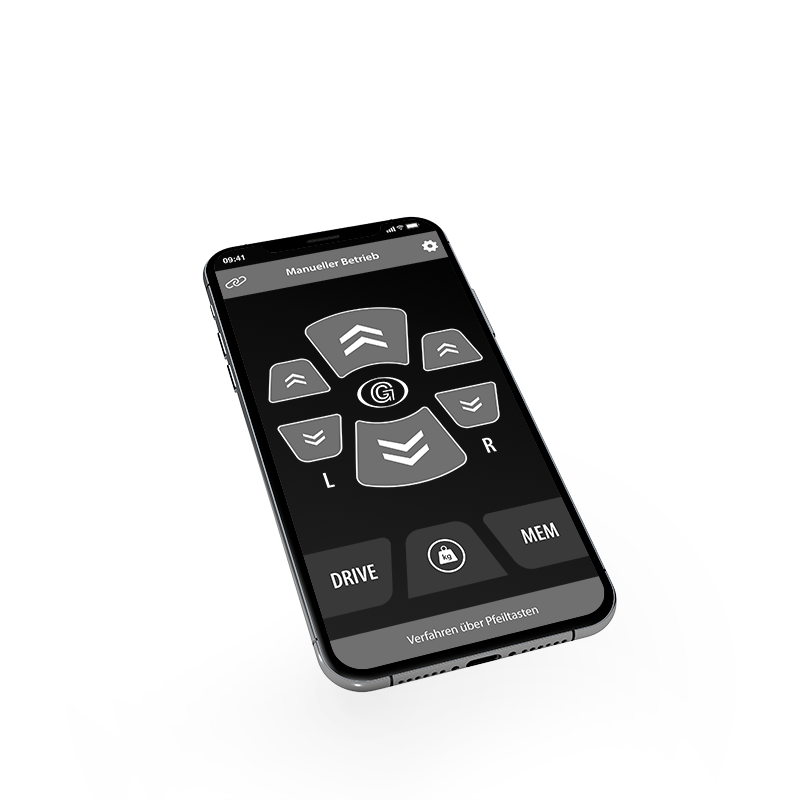
Modern auxiliary air suspension systems play a central role in the motorhome sector when it comes to stability, driving comfort and safe loading. While automatic ride-height adjustment was generally reserved for complex and costly full air suspension systems, and pressure and height adjustments in auxiliary air suspension systems previously had to be made manually, Goldschmitt offers an innovative and practical solution. The RHC® control system was specifically designed to make using auxiliary air springs significantly easier while also raising them to a new technical level. Using precise ride-height sensors, the control system continuously determines the vehicle’s current height and automatically compensates for even the smallest changes in load. This keeps the vehicle at the optimal ride height at all times – regardless of whether holiday luggage, bicycles or camping equipment is added. At the same time, operation is noticeably easier: instead of manually monitoring the pressure, the intelligent software takes care of all processes, thereby minimising operating errors and negative effects on driver assistance systems.
- Automatic ride-height control
- No pressure monitoring required
- Compact, illuminated control unit
- Free smartphone app
- Optional weighing function
Available for the following vehicle models:
- Citroën Jumper, seit 2006
- Fiat Ducato, seit 2006
- Ford Transit, seit 2014
- Mercedes-Benz Sprinter, seit 2018
- Opel Movano, seit 2021
- Peugeot Boxer, seit 2006
- VW Amarok, seit 2023
Compatibility may vary depending on the vehicle model, drive type and body type.
The optional rear-axle weighing function is only available for vehicles with sufficient suspension travel and may incur additional costs.
One of the most important functions of the RHC® control system is the automatic adjustment to the optimal ride height for every load. Changes in weight and vehicle height are detected by the ride-height sensors and compensated for via the air springs. Monitoring the air pressure using analogue pressure gauges is no longer necessary. For this reason too, the dimensions of the RHC® control unit and the installation effort could be significantly reduced compared with conventional systems.
Constant vehicle height through automatic ride-height control.
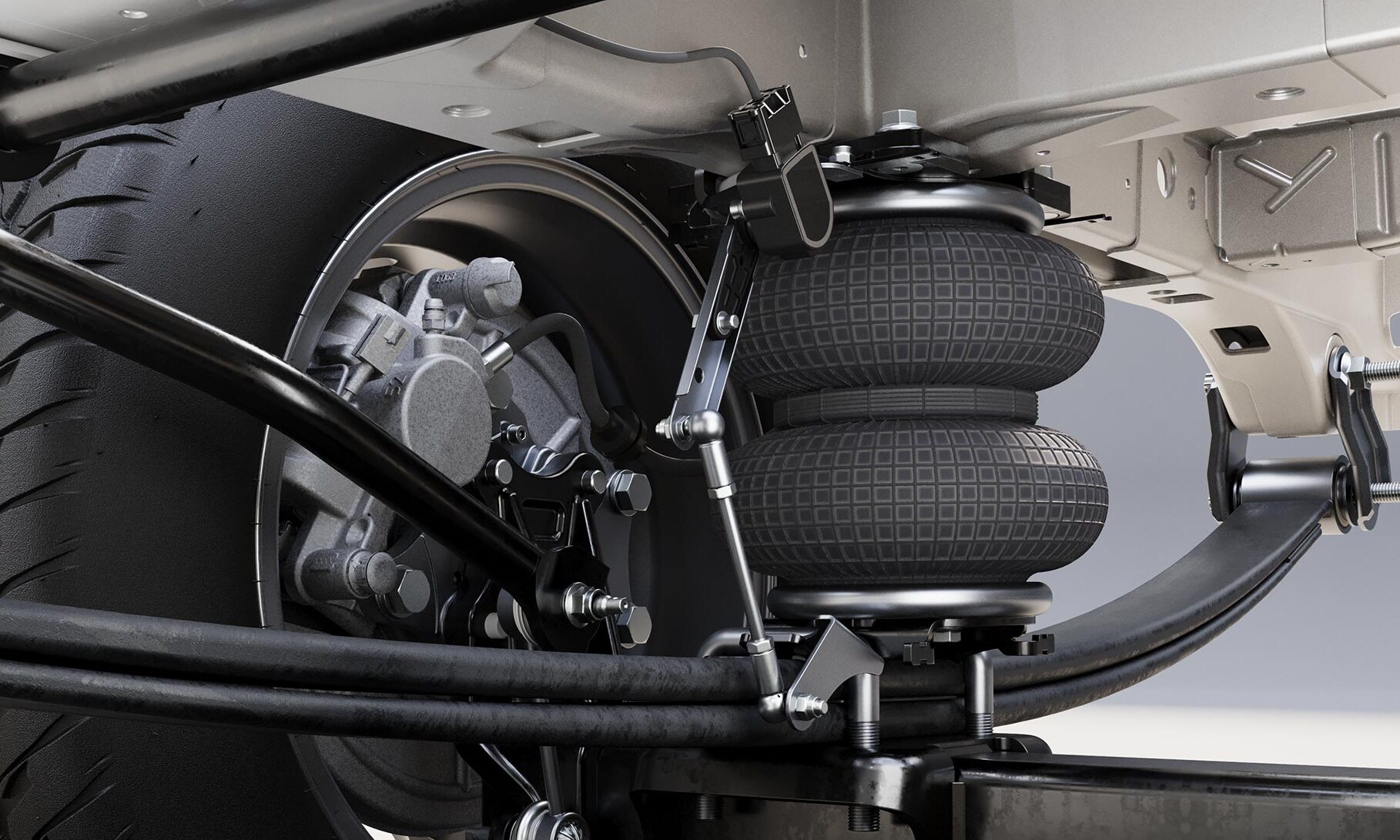
Fully automatic ride-height control is at the heart of our RideHeightControl – RHC® for short. Ride-height sensors continuously monitor the position of the rear axle, detect changes in vehicle height and report them to the control unit. The control unit processes all relevant system parameters and precisely adjusts the pressure in the air springs. In this way, the RHC® ensures a consistent ride height, reliably compensates for differences in side-to-side loading and guarantees the proper functioning of assistance systems such as ABS, ESP and traction aids. In contrast, the air pressures in manually controlled auxiliary air suspension systems have to be set by hand. Although the workshop usually provides a reference value for the pressure to be used after installation, this depends heavily on the actual load. Every change in the vehicle’s weight requires a new adjustment process to achieve the desired ride height – a time-consuming and error-prone process. Especially in the motorhome sector, where payload and weight distribution often vary, the RHC® ensures that the vehicle always maintains the optimal ride height. Even when the vehicle is parked and the rear-axle load changes as a result of loading bicycles, luggage or camping equipment, the RHC® detects the deviation the next time the vehicle is started and automatically restores the defined ride height. Users benefit from maximum safety, confident handling and a consistently pleasant driving experience – a level of comfort that was previously only possible with complex full air suspension systems.
Intuitive control for maximum convenience.
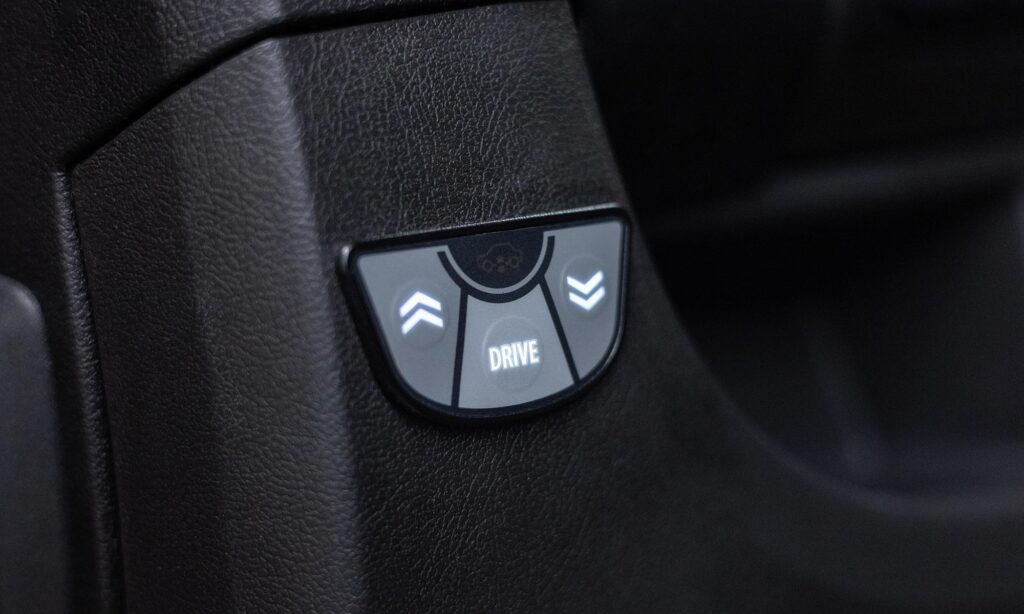
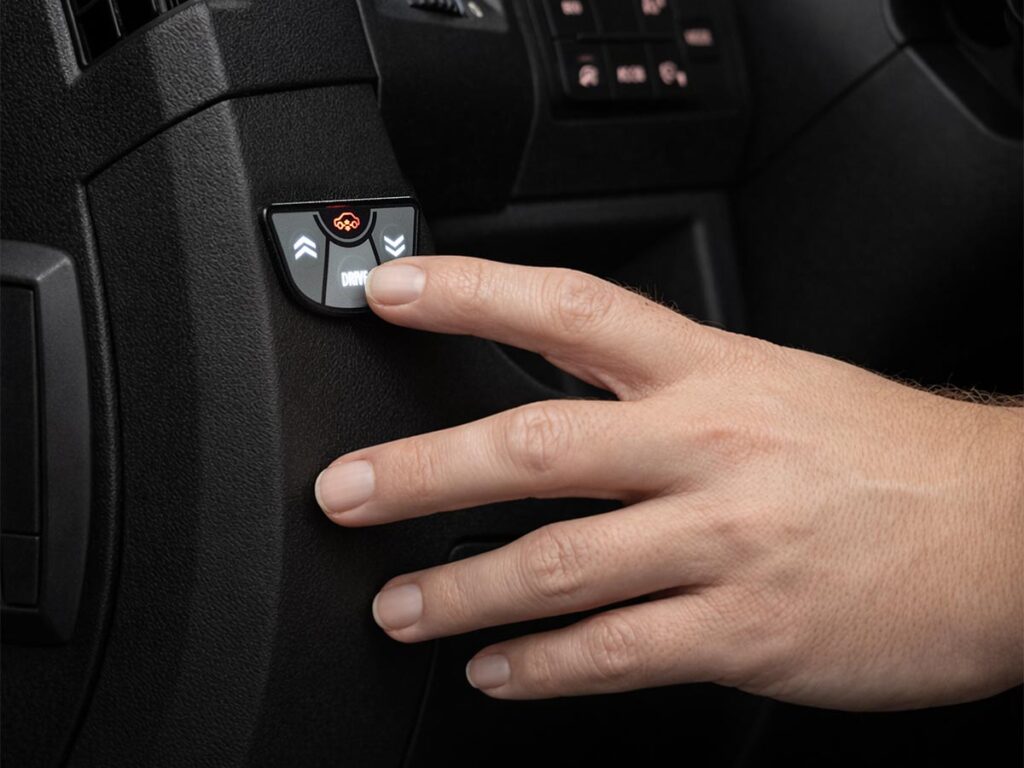
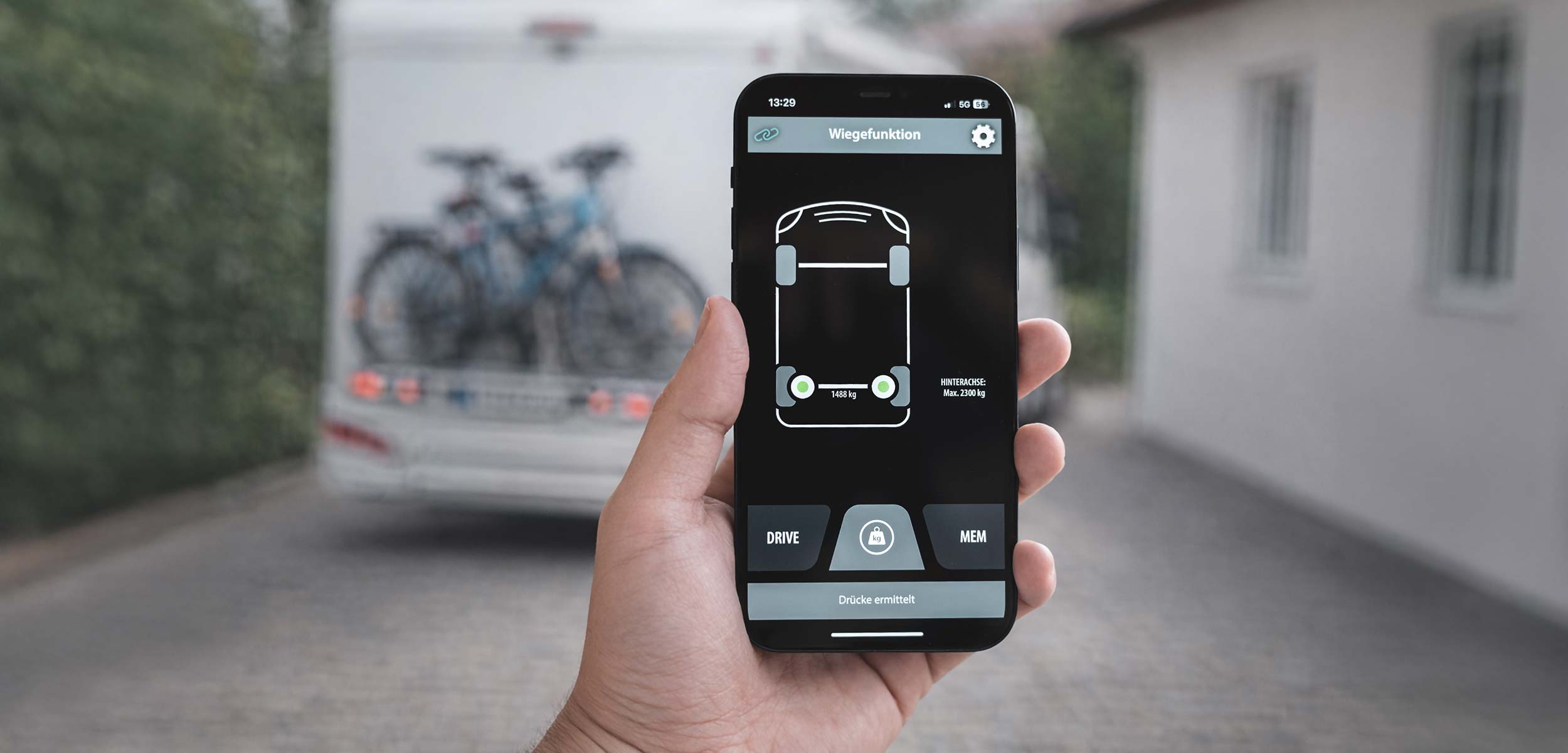
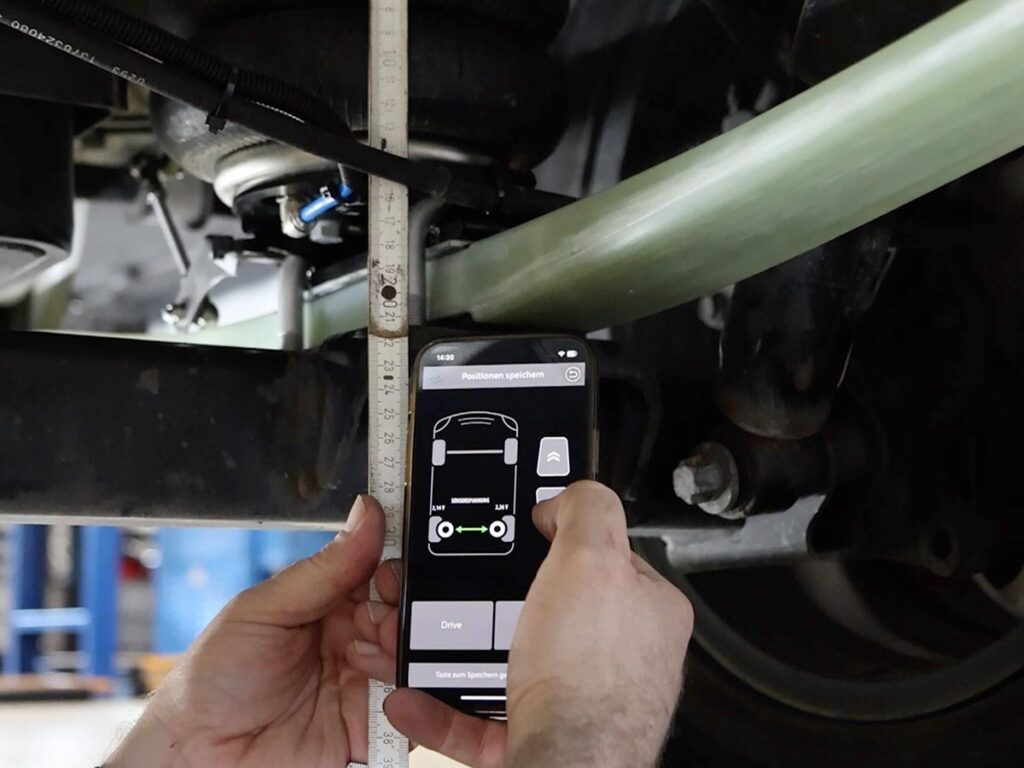
A key advantage of Goldschmitt’s RHC® control system is its exceptionally simple operation. The compact control unit can be installed almost anywhere within the driver’s field of view without visually impairing the interior. The high-quality control panel blends harmoniously into the cockpit and provides a clear, modern display of all functions. The control unit can be used to quickly raise the rear of the vehicle when necessary – for example, when driving over steep ramps – or lower it to make loading more convenient. If the vehicle is parked outside the defined ride height or the vehicle height is manually changed while parking, for example to compensate for an incline at a campsite, all that is required before driving is to press the Drive button to reactivate the regular ride height. A red LED on the control unit indicates when the ignition is switched on that the vehicle is not at the specified ride height. Regardless, the vehicle can also be driven with the rear raised if necessary – for example, to safely pass over ramps or obstacles. The free smartphone app provides additional convenience. It enables intuitive control of all functions, including automatic mode (automatic ride-height control), the raising and lowering function, and independent control of the left and right air springs. The app can also be used to save a desired position and recall it when needed. Live data and an integrated event log also provide valuable information about the system status. For even greater safety, the app offers an optional weighing function that lets you monitor the rear-axle load at any time.

Weighing the vehicle using air suspension.
The optional weighing function makes monitoring the rear-axle load particularly easy. Depending on the available suspension travel, the RHC® control system can be expanded so that the current rear-axle load can be read directly via the smartphone app. The display is based on the pressure values recorded in the air suspension system and calculated by the intelligent software of the RHC® control system. This function offers considerable added value, especially for motorhomes with extensive equipment or changing loads. Drivers always have a quick overview of the actual load on the rear axle and can therefore better assess how additional luggage, bicycles or other accessories affect the axle load. The weighing function thus supports more conscious loading of the vehicle and helps ensure compliance with permissible axle loads. At the same time, it increases transparency regarding the current loading condition – a practical additional benefit for anyone who wants to use their motorhome safely and with optimal balance. And if the rear axle’s capacity or the permissible gross vehicle weight is ever no longer sufficient, our supplementary springs – optionally combined with our reinforced coil springs or comfort struts for the front axle – can be used to achieve an increase in payload capacity.
Simple installation thanks to a plug-and-play solution.
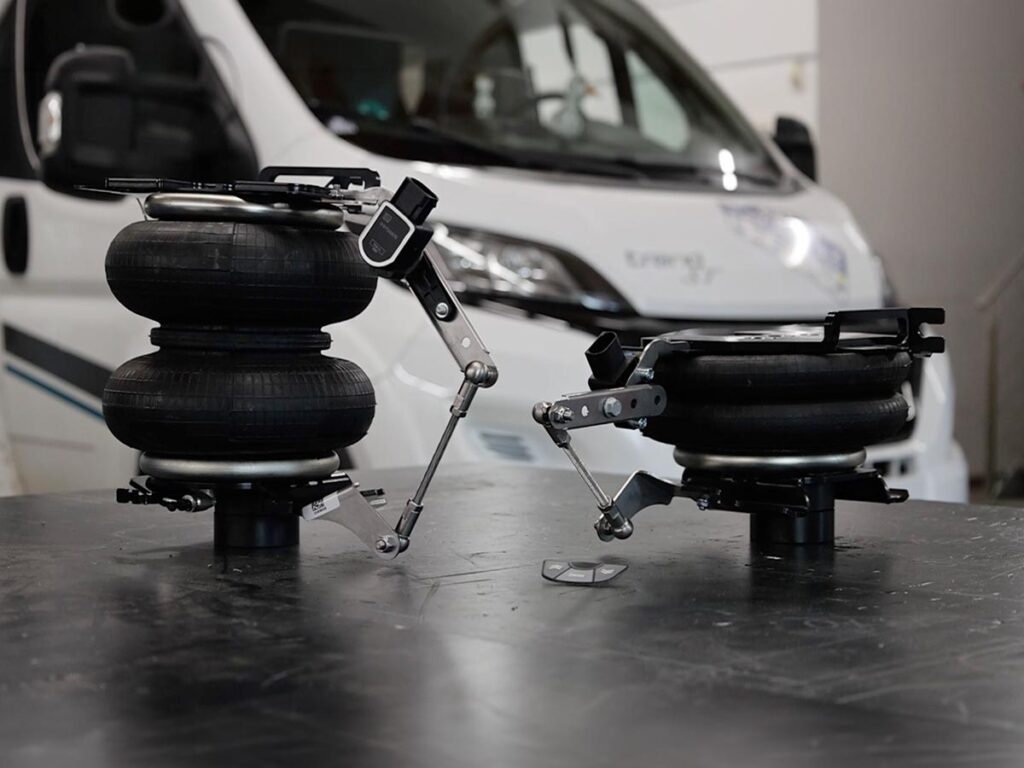
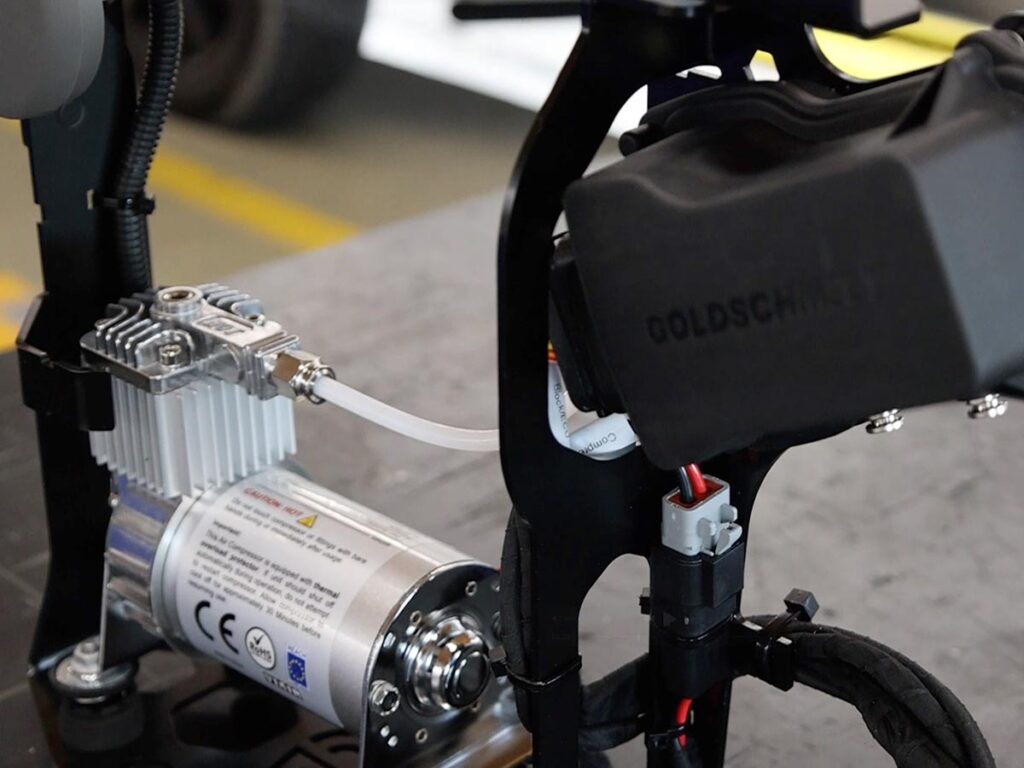
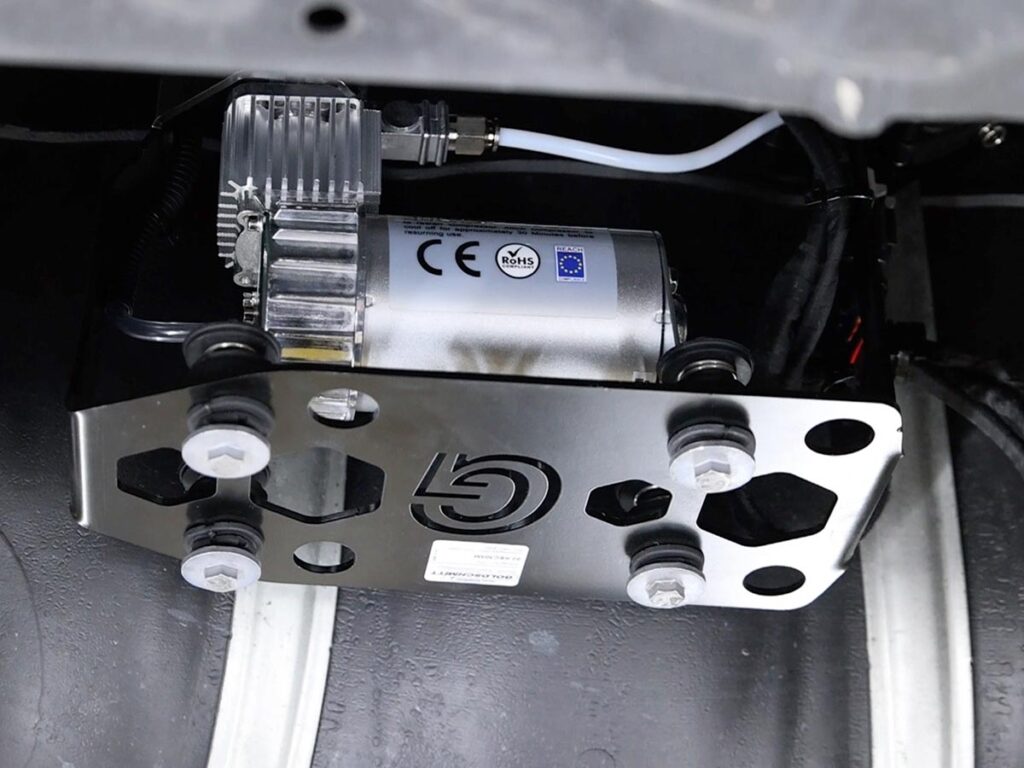
Unlike conventional auxiliary air suspension systems, installing our RHC® control system is particularly straightforward. A small hole for the power supply is all that is needed for the compact control unit – complex cut-outs for pressure gauges or air hoses can be dispensed with entirely. The air supply runs directly from the valve block to the compressor and from there to the two air springs, eliminating the need for complex routing of lines through the vehicle. Thanks to its flexible design, the control unit does not depend on vacant switch slots and can be placed almost anywhere within the driver’s field of view without impairing the interior. The plug-and-play design enables particularly efficient installation: all components are optimally matched to one another, allowing installation companies to benefit from short installation times and simple setup. Commissioning is carried out conveniently via the free smartphone app, where all basic settings can be configured with ease. In addition, the RHC® control system can be integrated effortlessly into existing Goldschmitt auxiliary air suspension systems. Even vehicles with an air suspension system already installed can benefit from automatic ride-height control – without having to replace the entire system.
You may also be interested in

Find a suitable
Goldschmitt partner near you
If travelling to one of our Goldschmitt Technik-Center locations is too far, our proximity search will help you find a suitable workshop nearby.