The burden of the load.
Vehicles over 3.5 tonnes must comply with technical specifications and legal regulations for safety and legal certainty in road traffic.

More payload. More safety. More responsibility.
A payload upgrade – often also referred to as uprating – makes it possible to technically increase the permissible gross vehicle weight and thereby create additional payload reserves. This offers tangible benefits above all for motorhomes, commercial vehicles, and special-purpose vehicles: greater safety, more stability, and more flexibility in everyday use. However, not every vehicle can be uprated without further consideration. Technical prerequisites, suitable components, and corresponding expert reports are mandatory (Stages of an uprating). However, increasing the permissible gross vehicle weight also entails legal consequences. Once the 3.5-tonne threshold is exceeded, road traffic regulations change – from the required driving licence category and speed limits through to toll regulations or special marking requirements. Anyone uprating their vehicle should therefore not only keep the technical aspects in mind, but also be familiar with the legal framework conditions that play an important role in day-to-day driving. Goldschmitt products provide the technical basis for higher load capacities, but do not replace the knowledge of the applicable regulations that drivers must absolutely take into account.
Driving Licence
If a motorhome or commercial vehicle exceeds 3.5 tonnes after an uprating, a category B driving licence is no longer sufficient. Category C1 is required to drive such vehicles. An important exception applies to drivers who obtained their licence before 1 January 1999, as the old category 3 licence permits them to drive vehicles with a permissible gross weight of up to 7.5 tonnes and they therefore do not require an additional licence. The EU has since agreed to raise the weight limit, meaning that category B licence holders will in future be permitted to drive motorhomes of up to 4.25 tonnes. Implementation is now a matter for the individual member states and is expected to be completed by 2030.
Speed Limit
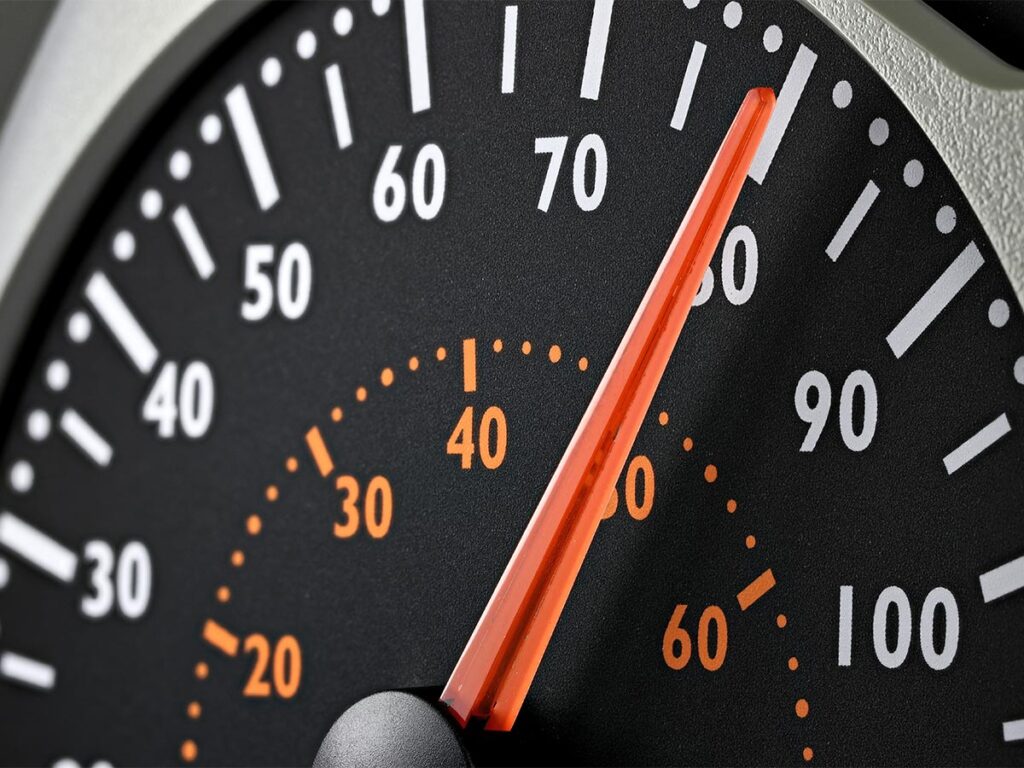
Once the 3.5-tonne threshold is exceeded, the statutory speed limits change. In Germany, motorhomes over 3.5 tonnes are subject to a maximum speed of 100 km/h on motorways and expressways. On rural roads, 80 km/h must not be exceeded. These limits apply regardless of the vehicle’s technical performance capability and serve the general interest of road safety.
Overtaking Ban
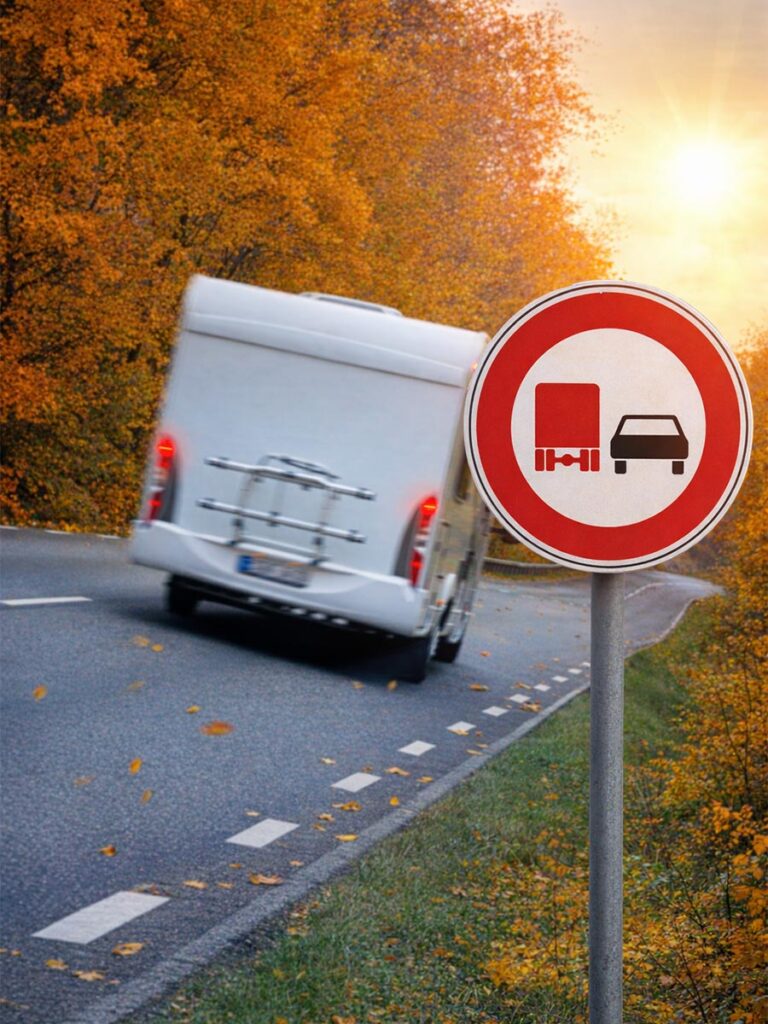
Motorhomes with a permissible gross weight of more than 3.5 tonnes must in some cases comply with the same road traffic rules as lorries. These include, among other things, overtaking bans and through-traffic restrictions indicated by the corresponding road signs. The signage is always the decisive factor. If, for example, the supplementary sign “over 7.5 t” is displayed beneath an overtaking ban sign, the ban applies only to vehicles with a permissible gross weight of more than 7.5 tonnes. Motorhomes between 3.5 and 7.5 tonnes are permitted to overtake in this case.
General Inspection
Vehicles with a permissible gross weight of more than 3.5 tonnes are subject to an adapted inspection cycle. During the first six years after initial registration, a general inspection (HU) at testing organisations such as TÜV, DEKRA, or GTÜ is required every two years. From the seventh year onwards, the vehicle must undergo an annual HU. These more frequent inspection intervals reflect the higher stresses and increased technical demands placed on heavier vehicles.
Toll Charges
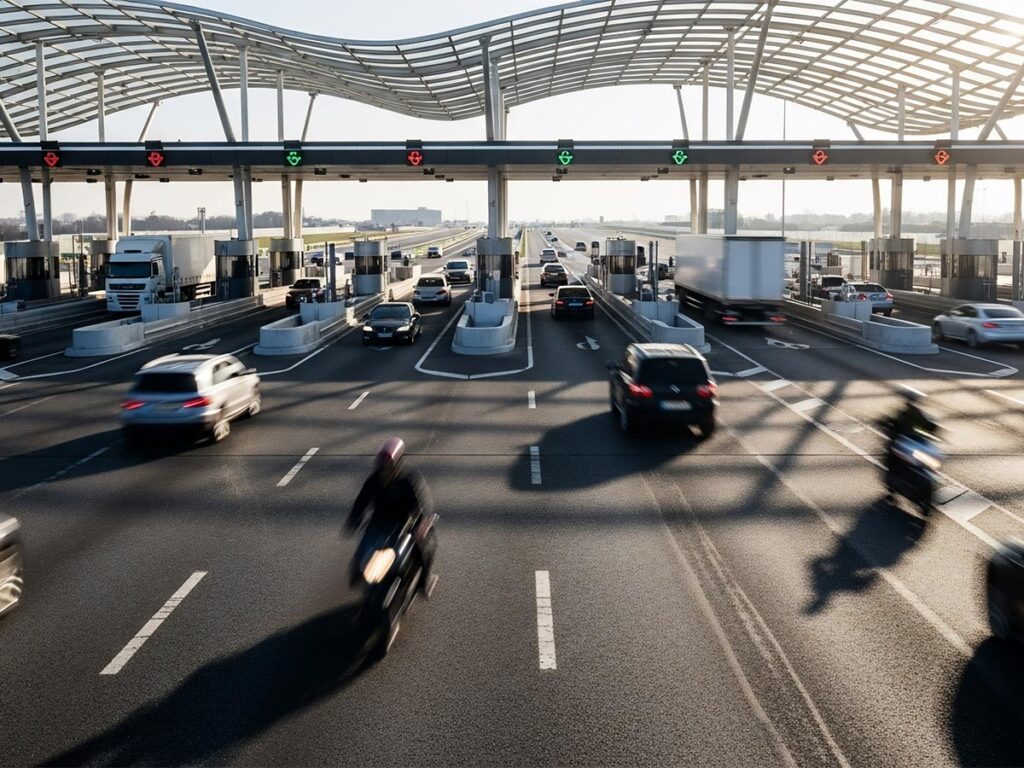
In Germany, vehicles with a permissible gross weight of up to 7.5 tonnes continue to be exempt from tolls. However, different regulations apply in several European countries. Austria is particularly relevant: for vehicles over 3.5 tonnes, the GO-Box is required on motorways and expressways, enabling tolls to be settled electronically. Other countries use comparable systems or levy route-based charges. Careful travel preparation prevents unpleasant surprises at the border.
Blind Spot Stickers
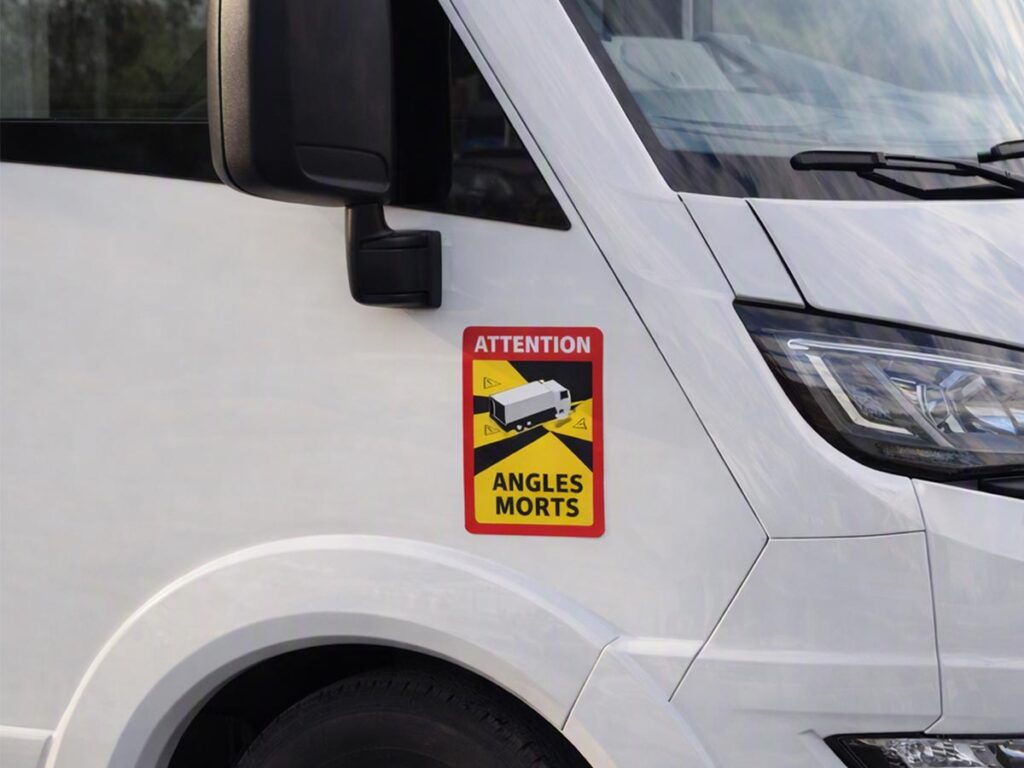
On French roads, vehicles with a permissible gross weight of more than 3.5 tonnes must be marked with “Angles Morts” stickers. These warning labels, measuring 17 x 25 cm, draw attention to blind spots and are intended to protect more vulnerable road users. The position of the stickers is clearly defined by law – incorrect or missing markings can result in fines. For motorhome drivers, this requirement is particularly relevant when travelling through France. The stickers are available online or, for example, at petrol stations near the border.