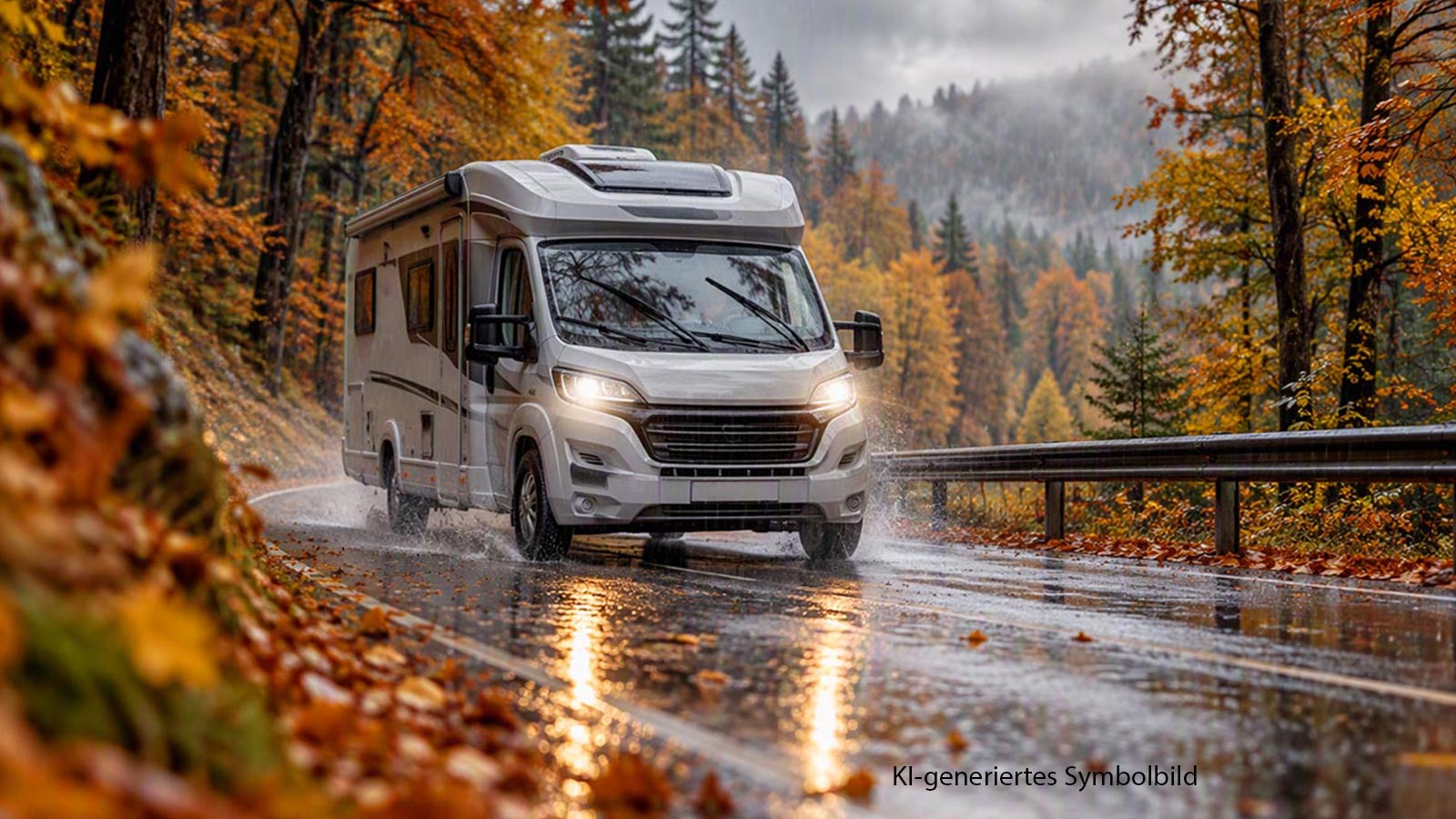

By Jürgen Rode. If someone had told me this beforehand, I wouldn’t have believed it. We have been traveling in a motorhome for decades, always right at the 3.5-ton limit. Whenever we headed off on summer vacation—loaded with children, kayaks, climbing gear, and provisions—that “spongy” feeling in the corners had simply become the norm. The constant fear of being overloaded—and the risk of a police inspection that could prevent us from continuing our journey—prompted my family and me to look into the possibility of increasing our vehicle’s payload capacity. The decision was made quickly: we would have the upgrade—which requires optimizing the standard suspension—carried out by the chassis specialists at Goldschmitt in Walldürn. Admittedly, our primary motivation for the upgrade was to meet legal requirements, rather than to improve driving comfort. However, the very first time we drove from Walldürn to Michelstadt—navigating the winding roads of the Odenwald region—it became immediately clear: the motorhome was far more stable, didn’t lean to the side even in the tightest bends, and handled uneven road surfaces exceptionally well. After more than 5,000 kilometers in Scotland—traversing everything from the narrowest lanes to gravel tracks—we wouldn’t want to be without our air suspension ever again. With a bit of practice, we’ve learned to determine the ideal air pressure for any given route, allowing us to be considerate of the road conditions while also refining our driving style. Never before has our motorhome felt so steady and composed on the road.
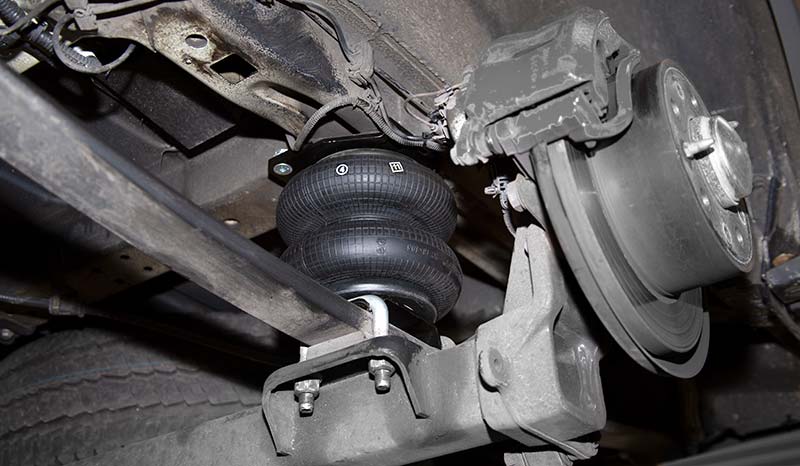
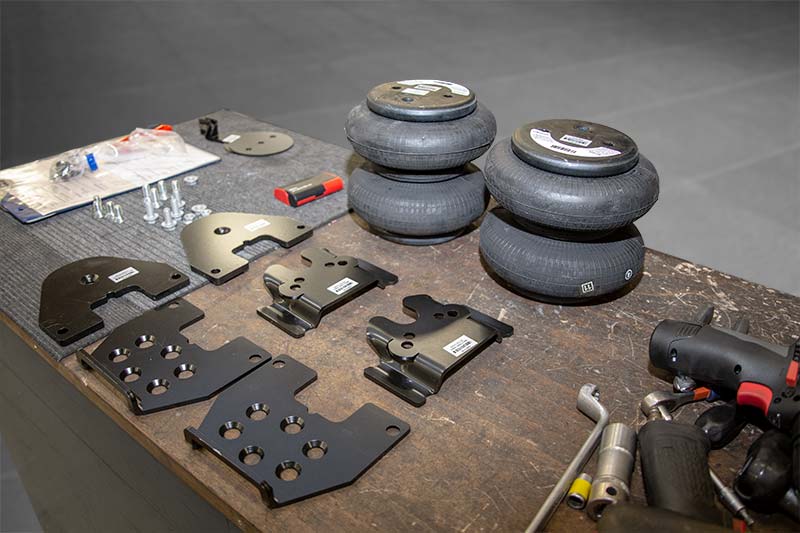
Installing the auxiliary air suspension system on a Fiat Ducato equipped with leaf springs takes approximately four hours. During this time, the air bellows, compressor unit, and control panel are installed, and the cables and air lines are routed and connected. Following this, the TÜV inspection is also carried out at the Goldschmitt Technical Center.
The installation at the Goldschmitt Technical Center was quite an experience. As is often the case with our motorhome, there was a unique complication that ruled out a standard installation. The technicians were really put to the test—the seat belts for our seating area emerged from the vehicle floor in the exact spot where the air bellows are typically mounted. However, the experienced technicians quickly found a solution, and the project remained on schedule.
The air suspension on the rear axle is supplied with air pressure by a small compressor. The controls are conveniently located on the dashboard and can be easily operated even while driving. For instance, while in the Camargue region of France, we were able to quickly lower the air suspension pressure when a perfectly smooth road suddenly and unexpectedly turned into a gravel track full of potholes. The softer setting was a relief—both for us and for the cups in our cupboards. The harsh jolts transformed into a gentle, rocking motion, allowing us to continue our journey with greater ease and peace of mind. Beyond the legal requirements—which now allow us to carry a load of 3.85 tonnes and ensure we are fully covered by our insurance—my wife Nadja and I have come to value the added comfort provided by the auxiliary air suspension even more.
Nowadays, it’s just the two of us traveling in our motorhome. Even if we were to switch to a new vehicle that falls back under the 3.5-ton limit, we wouldn’t want to give up the benefits of an air suspension system. Whether we’re navigating curves or driving on bumpy road surfaces, we’re always glad to have our Goldschmitt air suspension. The motorhome stays firmly planted on the road, the ride is smoother, and I find myself driving in a much more relaxed state. In this way, the vacation truly begins the moment we hit the road.
www.womo.blog
Jürgen Rode has been an enthusiastic camper for decades. To share his passion with like-minded individuals, he has run the online platform “womo.blog“—along with a YouTube channel of the same name—since 2012. A former securities trader by profession, he uses these channels to address practical, everyday questions related to motorhomes. Through engaging video and photo documentation, as well as compelling travelogues, Jürgen Rode offers a true treasure trove of information—a resource that proves invaluable not only to newcomers but also to seasoned campers.